2026-11-09 · Miguel Torres
Steps to Check for Slab Leaks in Arizona Desert Homes
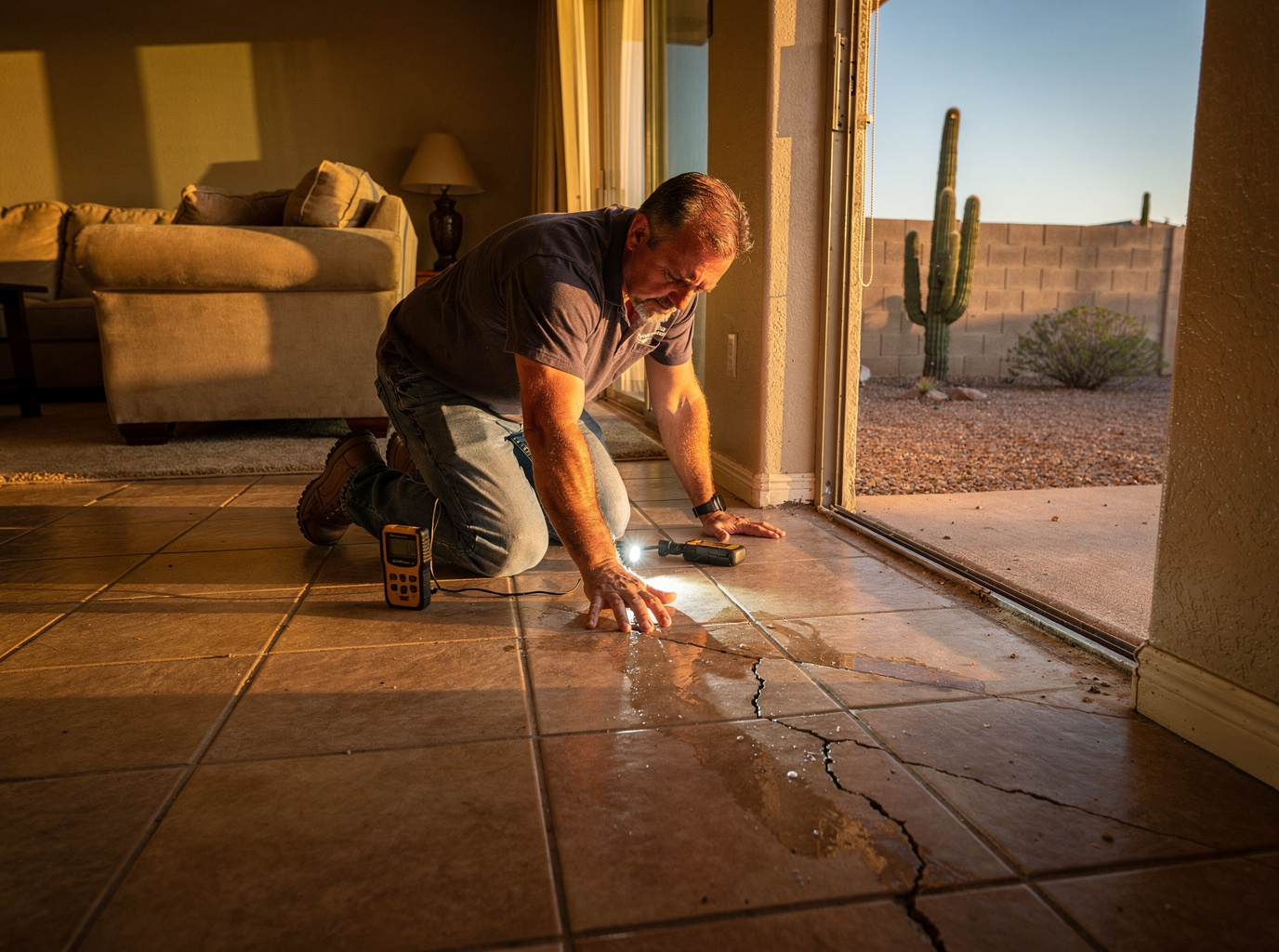
Checking for slab leaks in Arizona desert homes starts with tracking water meter readings over 24 hours while all fixtures stay off, then listening for hissing near baseboards, and finally scanning floors with a moisture meter for readings above 15 percent in concrete. Mesa homes in Red Mountain and Downtown Mesa often sit on older slabs poured before 1990 that expand and contract daily under 110-degree summer peaks, stressing copper supply lines until pinholes form. Superstition Springs properties near the mountains see extra soil movement from monsoon runoff that pulls pipes out of alignment. These conditions differ from Phoenix or Tempe builds because Maricopa County's low humidity accelerates evaporation around leak sites, making surface stains appear faster but hiding deeper moisture longer.
Preparing Your Inspection Tools and Timing
Work during early morning hours before 8am when slab temperatures stabilize and avoid the 2pm–6pm window when surface heat can mask meter readings. Gather a digital moisture meter, infrared thermometer, screwdriver for access panels, and notebook to record baseline water pressure at the main shutoff. In Mesa's hot desert climate, schedule checks after any 100-degree stretch because rapid cooling at night creates micro-cracks in slabs that let small leaks worsen. Residents near Riverview Park often find leaks first in laundry rooms where washer supply lines enter the slab, while homes closer to the Mesa Arts Center show issues under kitchen islands. Keep records for two weeks to spot patterns before assuming a slab problem exists.
Performing Visual and Sound Checks Around the Slab
Walk the perimeter inside and outside, looking for hairline cracks wider than 1/16 inch or white mineral deposits along the foundation edge in Superstition Springs homes. Listen with a stethoscope or inverted screwdriver at floor level for continuous running water when no fixtures operate; this sound travels farther through dry desert soil than in humid regions. Check under carpets and vinyl in Red Mountain ranch homes for damp spots that feel cooler than surrounding concrete by at least 5 degrees on an infrared thermometer. Note any musty odor near exterior doors that points to hidden moisture migrating from slab leaks rather than roof issues common after monsoons.
Using Moisture Meters and Pressure Tests
Place the moisture meter pins into carpet tack strips and along tile grout lines every 3 feet, flagging any zone above 18 percent as suspect. Shut off the main valve at the street and monitor the meter for movement over 30 minutes; movement greater than one gallon indicates a leak downstream, often under the slab in 40-year-old Downtown Mesa properties. Compare static pressure at an outdoor hose bib before and after shutting off interior valves—if pressure drops more than 10 psi overnight, suspect a slab breach. These steps help differentiate between supply line leaks and sewer issues that require different repair approaches in Maricopa County soil.
Interpreting Findings and Next Actions
High moisture readings paired with rising water bills of $30–$60 monthly usually confirm a slab leak in east Mesa homes built on expansive clay. Document locations with photos and meter numbers before contacting a restoration team, because early detection limits damage to subfloors in neighborhoods like Superstition Springs. Water damage restoration crews familiar with local slabs can isolate sections without full floor removal. Review the article What Affects Water Damage Repair Costs in the East Valley for typical price ranges tied to access difficulty. If readings stay normal yet pressure loss continues, schedule a camera inspection rather than assuming slab involvement.
Climate Factors Unique to Mesa Slab Leaks
Extreme summer heat in Mesa pushes slab surface temperatures above 120 degrees, causing copper pipes to expand 1/8 inch per 10 feet daily and fatigue joints faster than in cooler Phoenix subdivisions. Low annual rainfall means soil around foundations dries and shrinks, creating voids that allow leaks to spread horizontally before surfacing. Homes near the Superstition Mountains experience additional vibration from occasional rockfalls and flash flooding that loosens pipe straps. These patterns explain why leaks appear most often in 8–12-year-old sections of Red Mountain tract homes rather than newer builds with PEX tubing.