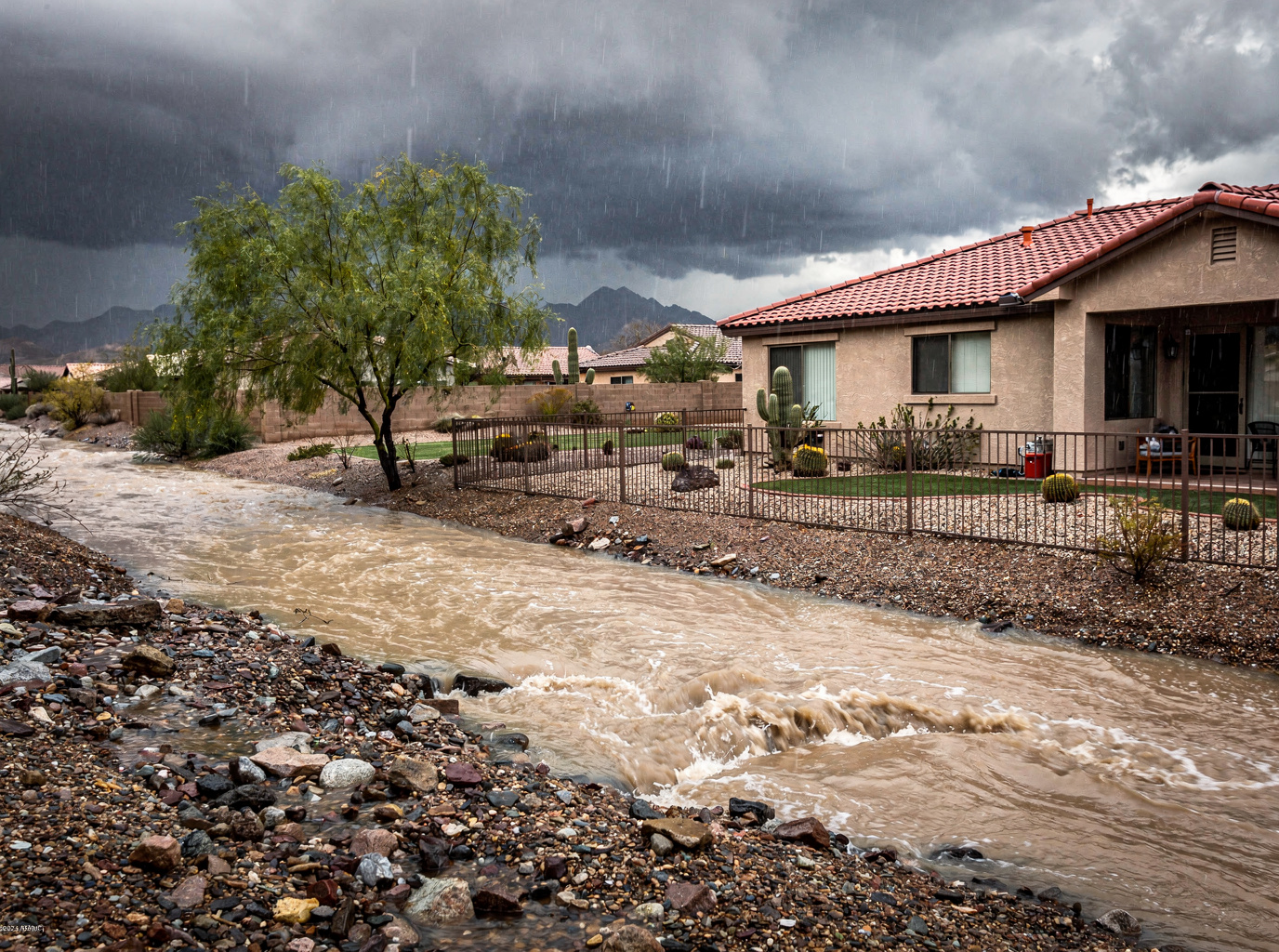
Paradise Valley sits in northeast Mesa with a mix of 1960s ranch homes and later infill on larger lots that back up to the Superstition Mountains. Monsoon runoff from the foothills often funnels toward lower streets, and the extreme summer heat above 110 degrees turns any standing water into a rapid mold risk inside older stucco walls and flat-roof attics. Our crew at 32 W Main St responds directly from central Mesa, taking the same routes locals use along Brown Road and Power Road to reach these properties before moisture migrates into Red Mountain or Superstition Springs neighborhoods.
Access in Paradise Valley can mean long driveways and limited side-yard space, so we stage equipment on the street and use shorter hoses to keep disruption low for neighbors. The hot desert climate means we run high-velocity drying right away to beat the heat that otherwise bakes moisture deeper into adobe-style foundations common here. Homeowners near Riverview Park and the Mesa Arts Center know the seasonal pattern: summer storms hit hard, then the dry air tricks people into thinking the job is done when hidden pockets remain.
Around 9. Paradise Valley
We regularly work near:
- 📍Riverview Park
- 📍Superstition Mountains
- 📍Mesa Arts Center
- 📍Red Mountain
Water Damage Restoration in 9. Paradise Valley — Local Notes
- •Flat roofs on many Paradise Valley homes collect monsoon water that seeps into attic insulation, requiring infrared scans before removal.
- •Extreme summer heat above 110 degrees accelerates bacterial growth in standing water, so extraction must start within hours to prevent odors traveling through shared walls.
- •Larger lots with gravel landscaping can hide drainage swales that direct water toward foundations during heavy rains from the Superstition Mountains.
- •Older ranch homes along streets like E McLellan Rd often have slab-on-grade construction where water travels under tile, needing targeted moisture mapping.