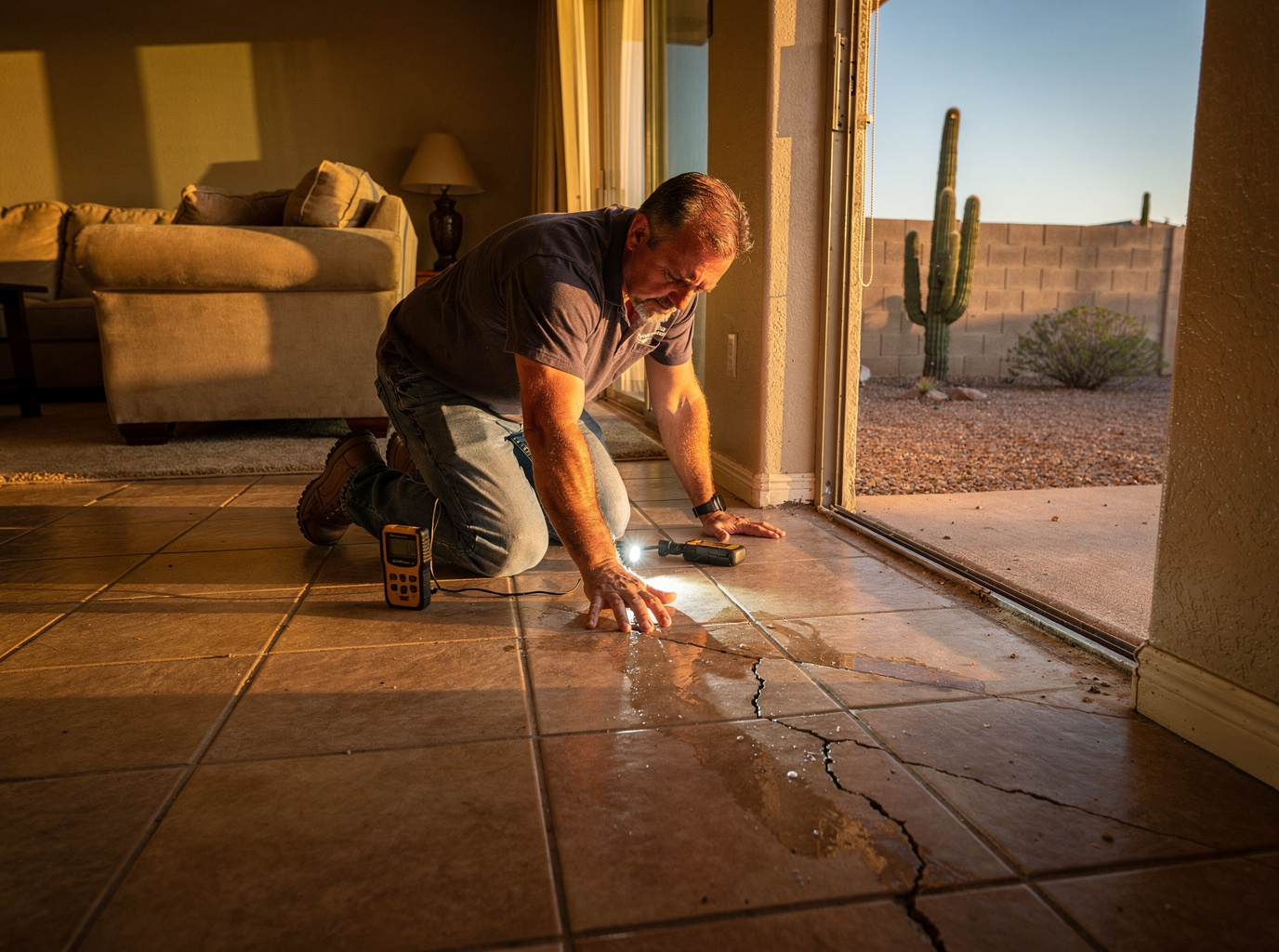
Fountain Hills sits east of central Mesa with its own distinct desert ridges and lake-fed neighborhoods. Water damage restoration here often starts with monsoon runoff that funnels down Saguaro Boulevard or pools behind retaining walls near the lake. Our crews based at 32 W Main St respond directly to these calls, bringing extraction equipment suited to stucco homes and rocky lots that drain slowly once summer storms hit.
Many properties around Fountain Park and Eagle's Nest Park were built on sloped pads with limited side-yard access. That layout changes how we set up drying zones and move dehumidifiers without disturbing desert landscaping or community trails. We handle slab leaks and roof intrusion the same way locals expect: arrive during posted hours, give a clear plan, and finish the job without cutting corners on the steep grades common in this zip.
Serving Fountain Hills from Mesa means we know the quickest routes around Shea Boulevard traffic and the extra time needed for equipment on narrow cul-de-sacs. Hot desert days speed up mold risk after any leak, so we prioritize containment before the heat turns standing water into a bigger problem for homeowners near McDowell Mountain views.
Around 8. Fountain Hills
We regularly work near:
- 📍Fountain Park
- 📍Fountain Hills Lake
- 📍Eagle's Nest Park
- 📍Saguaro Boulevard
- 📍Shea Boulevard
Water Damage Restoration in 8. Fountain Hills — Local Notes
- •Desert lots in Fountain Hills often direct monsoon flow straight to foundations because of natural rock outcrops and minimal curb gutters.
- •Stucco and tile homes from the 1980s-1990s here sit on raised pads that trap moisture under patios when lake-area irrigation oversaturates the soil.
- •Narrow driveways and shared walls around the golf course communities require smaller extraction units and extra containment to avoid disturbing neighboring properties.
- •Extreme summer heat accelerates evaporation, so drying plans must account for rapid humidity spikes inside closed-up vacation homes near the fountain.